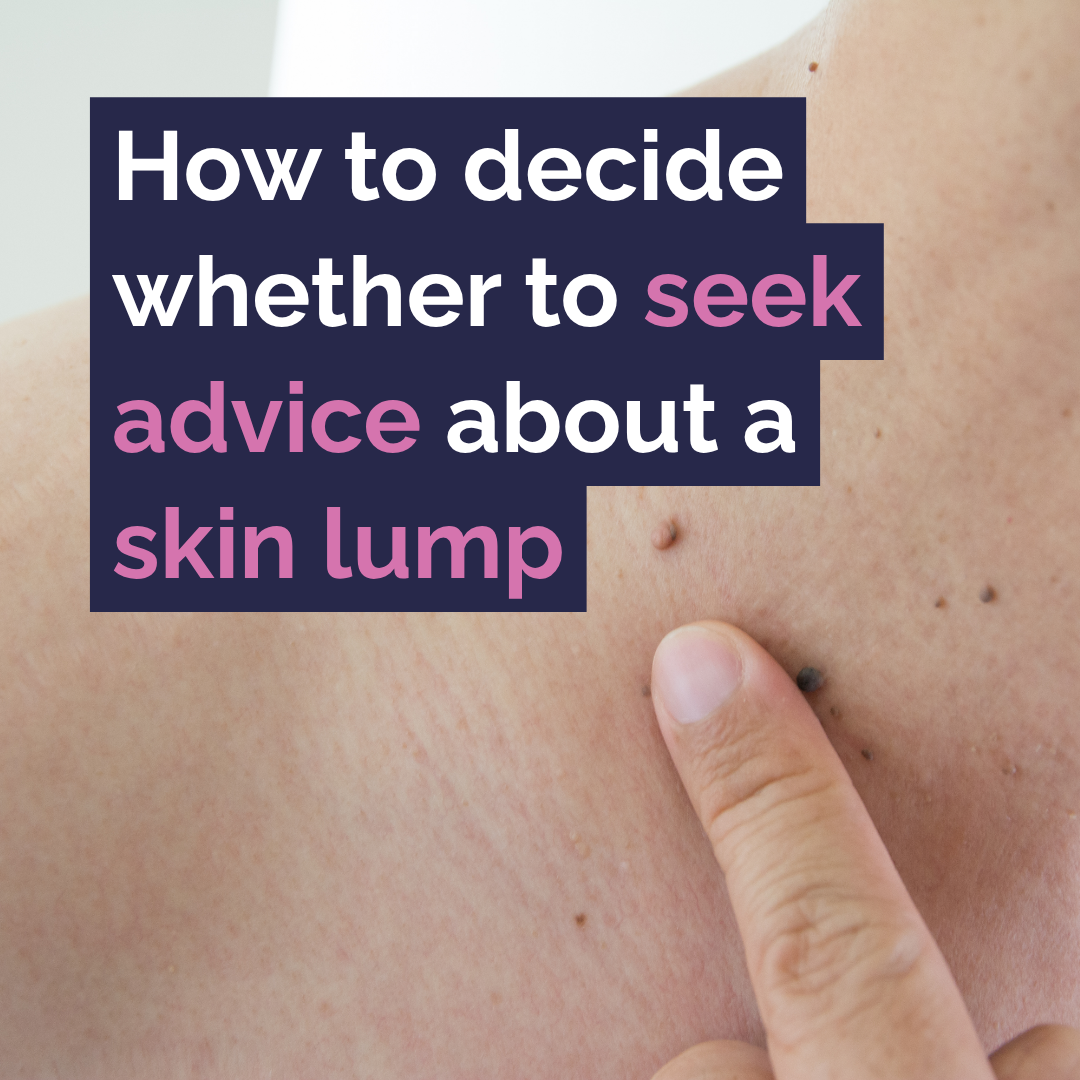
Noticed a lump under your skin, a mole you are unsure about or a growth that catches on clothing? For a non-urgent skin concern, you can contact Provide Wellbeing’s minor skin surgery service for an initial consultation. Our clinician can examine the area, assess what it may be and discuss whether treatment or further investigation is appropriate.
You do not need a diagnosis or a decision about removal before contacting us. The consultation is an opportunity to get your concern checked, understand the options and ask questions. If you have already had an assessment, we can also discuss your treatment options.
What are the common types of skin lump
A lump beneath the skin and a growth on its surface can have different causes.
Moles
A mole is a coloured spot on the skin. Many are harmless, but a mole that changes size, shape or colour needs GP assessment.
Skin cysts
A skin cyst is a round lump just beneath the skin. It may need no treatment if it is not causing problems; an infected or troublesome cyst may need care. Do not squeeze it, as this can spread infection.
Lipomas
A lipoma is a soft, fatty lump beneath the skin. Lipomas often need no treatment, but a clinician should check a lump before you assume that is what it is.
Skin tags
A skin tag is a small, soft growth that may hang from the skin. It can be confused with other growths. Do not try to remove it yourself without GP advice because of the risks of bleeding, infection and scarring.
How can Provide Wellbeing check your skin concern?
At your initial consultation, our clinician will discuss your concern and examine the area. A digital dermatoscope may be used to look more closely at a skin lesion and help with diagnosis. The assessment can help establish what the concern is, whether it appears benign and whether our service can offer suitable treatment.
If the assessment suggests that further investigation or another service is needed, the clinician will explain the appropriate next step. Before your appointment, note when you first noticed the lump or growth, whether it has changed and how it affects you. Mention any previous assessment or treatment.
When should you get a skin lump checked
Arrange a GP appointment if a lump:
- Gets bigger or is hard and does not move.
- Becomes painful, red or hot.
- Remains for more than two weeks or grows back after removal.
For a mole, seek GP advice if it changes size, shape or colour, becomes painful or itchy, or starts bleeding or crusting. A new or unusual skin mark that remains for a few weeks also needs checking. You do not need to wait for a lump or mole to hurt before seeking advice.
A breast or testicular lump, or persistent swelling in the neck, armpit or groin, should go through a GP assessment rather than a routine skin removal enquiry.
When does a skin lump need more urgent advice
For a sore or red skin lump that may be a cyst, ask for an urgent GP appointment or contact NHS 111. Infection may need treatment before anyone considers removal. Redness can be harder to notice on black or brown skin, so mention soreness and other changes too.
If a mole is changing, contact your GP rather than waiting to arrange cosmetic removal. If they suspect melanoma, they can refer you to a hospital specialist.
What can our minor skin surgery service offer?
Once a growth has been assessed as benign, meaning non-cancerous, you can discuss whether leaving it alone or removing it is appropriate. Its position and effect on everyday life can influence that decision. Removal involves risks, including infection and bleeding; scarring should also be discussed.
Our self-pay minor skin surgery service in Colchester provides initial consultations and treatment for suitable benign skin concerns, including moles, cysts and skin tags, as well as lipoma removal. Your consultation comes first: the clinician will explain your options, suitability, costs and aftercare before you decide whether to proceed.
Useful questions include whether removal is recommended, what scar to expect, whether tissue testing is needed, how recovery may affect work or exercise and what the full cost includes. You can ask these before choosing to proceed.
Frequently asked questions
Does a painless lump still need checking
Yes, if it is unexplained, growing, hard and fixed, persistent or worrying you. Pain alone does not tell you whether a lump needs investigation.
Does every harmless lump need removing
No. A confirmed lipoma or cyst may need no treatment if it is not causing problems. Assessment helps you weigh up the options.
Do I need to know what the lump is before contacting you?
No. You can contact our team about a non-urgent skin concern even if you do not yet know what it is. An initial consultation allows the clinician to examine it and advise on the next step. A changing mole or a lump with the warning signs described above should be assessed through your GP.
Would you like us to check a skin concern?
If you are unsure about a non-urgent skin lump or growth, our team can explain how to arrange an initial consultation. You can have it assessed and discuss your options without committing to removal.
To arrange an assessment or ask about treatment, talk to us today about our minor skin surgery service.
