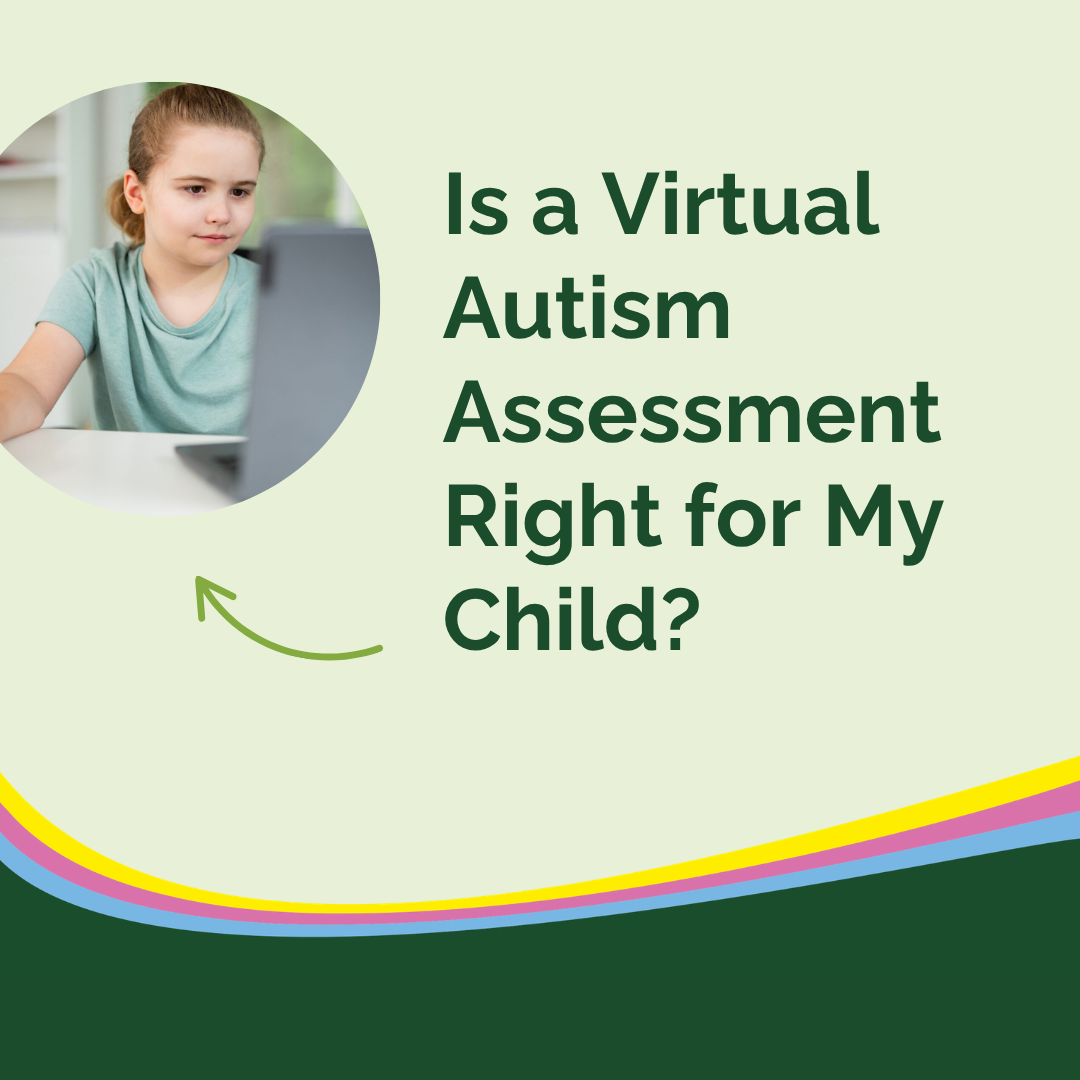
If you are considering an autism assessment for your child, one of the first questions may be whether a virtual appointment is the right option.
For some children and young people, being assessed from home can feel more comfortable than travelling to a clinic. It can reduce the stress of waiting rooms, unfamiliar settings and changes to routine. For others, a face-to-face assessment may still be the better choice.
This is why suitability is checked before a virtual autism assessment is offered.
At Provide Wellbeing, Virtual Autism Assessments are available for children and young people aged 8–17, where the virtual pathway is clinically appropriate for their needs.
What is a virtual autism assessment?
A virtual autism assessment is an autism diagnostic assessment delivered online using Microsoft Teams.
Your child or young person takes part from home, with parent or carer involvement throughout the process. Although the appointment happens online, the assessment is still structured, clinician-led and designed to gather the information needed to understand your child’s communication, social interaction, behaviour, sensory profile and developmental history.
Virtual does not mean informal. It simply means the assessment is delivered remotely when this is the right option for the child.
Who may be suitable for a virtual autism assessment?
The virtual autism assessment pathway may be suitable if your child or young person:
- is aged 8–17
- can communicate using full sentences
- is able to take part in an online assessment with parent or carer support
- has access to a working laptop or suitable device
- has a camera, microphone and reliable internet connection
- can use Microsoft Teams for the appointment
- is not currently in a mental health crisis
- does not have a learning disability or significant learning difficulties that would make a different assessment approach more appropriate
- is not selectively mute, as this may make it difficult to gather the information needed virtually
These criteria help the clinical team make sure the assessment is safe, appropriate and meaningful for your child.
Why does screening happen first?
Before a virtual autism assessment is booked, you will be asked to complete screening questionnaires. The clinical team will then review this information as part of the triage process.
This helps determine whether a virtual assessment is likely to be suitable, or whether a face-to-face assessment would give a fuller and more reliable picture.
Screening may consider:
- your child’s age
- how they communicate
- whether they are likely to manage an online appointment
- any learning, language or mental health needs
- whether the right technology is available at home
- information from parents, carers and school
This stage is not about “passing” or “failing”. It is about making sure your child is offered the most appropriate assessment route.
When might a face-to-face assessment be more appropriate?
A face-to-face assessment may be recommended if your child’s needs are more complex or harder to assess online.
This may include children or young people with significant communication needs, selective mutism, learning disability, complex learning difficulties or a current mental health crisis. It may also be recommended if the team feels they need to observe your child in person.
If a virtual assessment is not advised, this does not mean your child cannot be assessed. It simply means a different pathway may be more suitable.
Why home can be helpful for some children
For some children and young people, home is where they feel most comfortable. This can make it easier for them to engage and may help clinicians observe them in a familiar setting.
Parents sometimes worry that their child will need to behave in a particular way during the appointment. They do not. Your child does not need to “perform”, sit perfectly still or give perfect answers.
Clinicians are used to children needing time to settle, moving around, taking breaks, being quiet at first or needing reassurance. The aim is to understand your child as they are.
What technology do you need?
For a virtual autism assessment, you will need:
- a working laptop or suitable device
- a camera and microphone
- reliable internet connection
- access to Microsoft Teams
- a quiet, private space where your child feels comfortable
It can help to test your device before the appointment, make sure it is charged and have any familiar items nearby that may help your child feel settled.
You do not need to create a perfect clinical environment at home. The main thing is that your child can be seen and heard clearly, and that the appointment can take place somewhere reasonably calm and private.
What happens if the virtual pathway is suitable?
If the virtual pathway is suitable, the next steps will be explained to you by the team.
The assessment process usually includes screening questionnaires, clinical triage and booked assessment appointments. For autism assessments, this includes structured assessment tools such as ADOS and ADI-R.
Parents and carers are involved in the process, including the developmental interview and feedback session. Schools may also be asked to complete a questionnaire, as it is helpful to understand how your child presents in different settings.
After the assessment, you will receive feedback on the outcome and a report will be shared securely with parents or carers.
Taking the next step
A virtual autism assessment can be a helpful option for some children and young people, but it is important that suitability is checked first.
If you are considering an autism assessment for your child and would like to find out whether the virtual pathway may be appropriate, please contact the Provide Wellbeing team.
Call: 0300 303 9966
Email: provide.wellbeing@nhs.net
Our team will explain the next steps and let you know what information is needed before a decision is made about the most appropriate assessment route for your child.
